Late Payments: Why Another Reminder Isn't Enough
Late payments require more than just reminders. Understand why context matters and how to handle exceptions effectively.
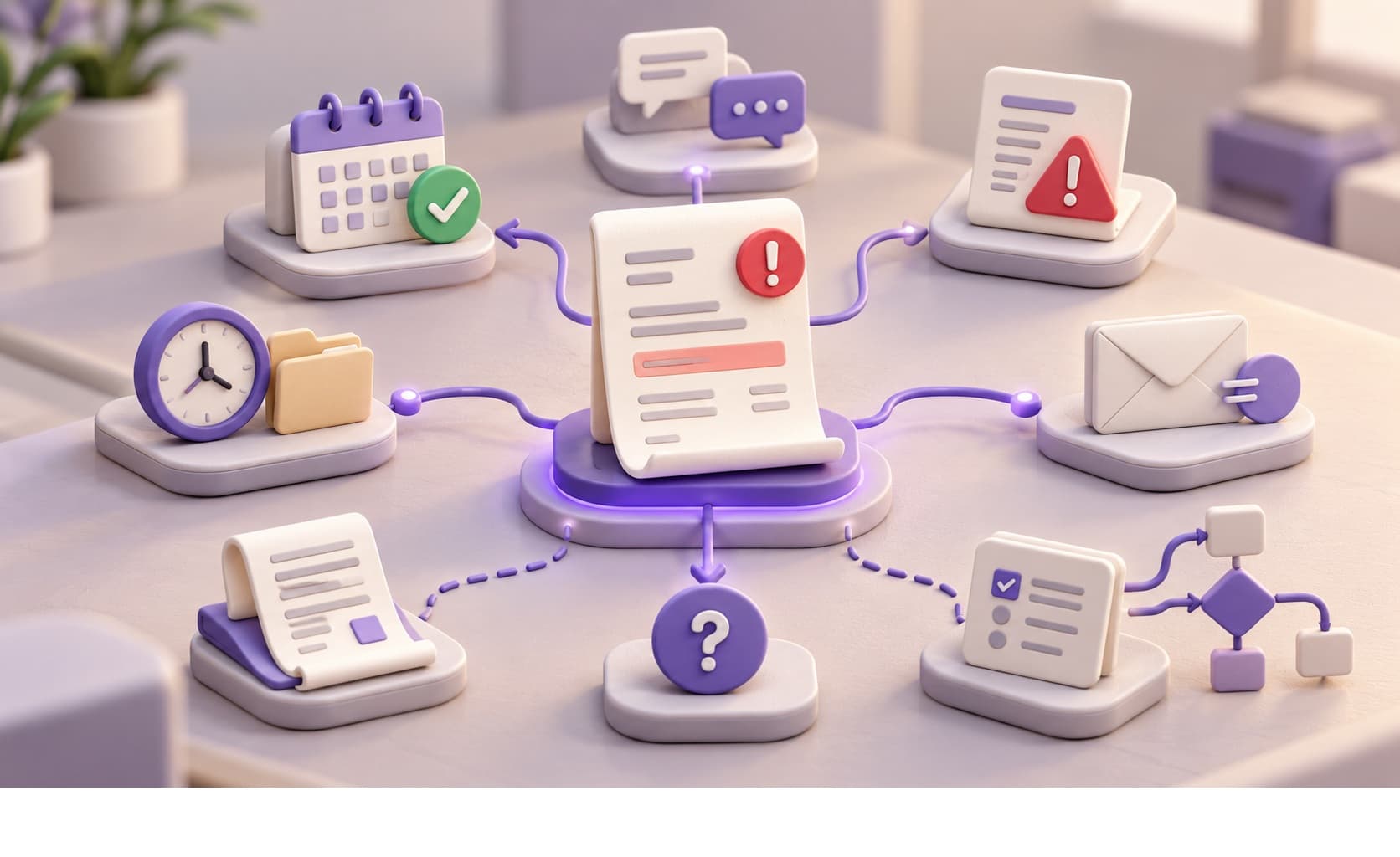
An invoice becomes overdue. The obvious next step is to send a reminder.
But what if the customer never received the invoice? What if they already promised to pay next Friday? What if they disputed the amount, or their AP team is waiting on a corrected PO number? What if nobody on your finance team knows yet why the payment is late?
All of these invoices can sit in the same aging bucket. They should not follow the same workflow.
The real challenge in AR is not identifying overdue invoices. It is holding enough context to decide what happens next.
Aging tells you where the problem is, not what the problem is
An aging report tells you which invoices have not been paid on time. It does not tell you why, or what to do about it.
A standard reminder fits a customer who simply has not paid. It is the wrong move when the invoice never arrived, the customer has committed to a date, a pricing dispute is open, AP needs more documentation, or the invoice itself is wrong. The next action should depend on the evidence, not only on days overdue.
Collections is an exception workflow
Once a customer misses the expected payment process, the invoice becomes an operational exception. Every exception needs five answers: what happened, what evidence supports it, who owns the next step, what happens next, and when to review it again.
Customer says | Exception type | Next action | Owner | Review |
|---|---|---|---|---|
| "We don't have invoice INV-1045 in our system." | Not received | Verify delivery, confirm the AP contact, resend or correct the invoice | Billing or AR | After resend |
| "We will process payment on October 10." | Promise to pay | Record the date, pause unnecessary follow-up | Agent | Day after the promised date |
| "The amount doesn't match our agreement." | Dispute | Record the dispute, route to the owner, pause payment requests | Account or contract owner | When resolved |
| "It's approved, but it missed this week's payment run." | Customer AP delay | Confirm the next payment run, follow up then | Agent | Next payment run |
| No reply, cause unknown | Unknown | Get the missing context: ask the customer, check the inbox and delivery status | Agent | After a set wait |
"Unknown" is a valid state. Guessing why a customer has not paid is worse than finding out.
The missing layer is customer context
Traditional AR systems hold structured financial records: customer, invoice, dates, amount, balance, payment, aging. Collections also depends on context that lives elsewhere: customer emails, promise-to-pay commitments, disputes, internal notes, contracts, account ownership, past conversations, tasks, payment history, and remittance information.
When that context is scattered across the ERP, inboxes, spreadsheets, CRM notes, and individual employees, your team has to reconstruct the story before it can act. That gap is what Flowwiz is built to close, on top of whichever ERP you run.
How Flowwiz agents move an exception forward
Flowwiz is an AI finance operations platform. Its agents act on overdue invoices instead of only reporting them.
- Detect. An invoice goes overdue under your configured collection process.
- Gather context. The agent pulls invoice status, customer history, communications, promise-to-pay status, disputes, and open tasks.
- Read the reply. Whether the customer answers by email, SMS, WhatsApp, or voice, the agent classifies the response: promise to pay, dispute, remittance information, request for information, delay, out-of-office, or an issue needing internal attention.
- Update the state. The commitment, dispute, or delay becomes structured data, not text buried in a thread.
- Act or hand off. The agent adjusts follow-up, routes the issue to its owner, or answers the customer directly.
The state change is the point, not the generated email:
- A promise to pay is captured, follow-up adjusts, and the agent checks whether payment arrives.
- A dispute is recorded and routed to an owner. Payment requests pause until it is resolved, then resume.
- A request for information is answered by the agent when it can, and becomes an internal action when it cannot.
Agents handle routine exceptions. People decide disputes, conflicting evidence, and anything outside the controls you set. Those gates are part of the design, so finance operations keep moving with human judgment exactly where it matters.
Fix the problems that create tomorrow's overdue invoices
Handling one overdue invoice correctly is useful. Seeing the same exception repeat is worth more:
- Repeated delivery failures point to wrong billing contacts or invoice-delivery setup.
- Repeated pricing disputes point to gaps in contract-to-invoice validation.
- Repeated PO issues point to missing information earlier in the billing process.
- Repeated customer AP delays should change when the agent follows up.
- Repeated missed promises should change how the account is handled.
Flowwiz agents act on these patterns. They flag the upstream fix to the owner and adjust follow-up timing for the account, so the same exception stops coming back.
Finance operations continue after the reminder
Sending an email is easy. Knowing whether the customer replied, what the reply means, who should act, when to follow up, and when to escalate is the hard part. That is why AR automation has to go beyond scheduled reminders.
The aging report tells you an invoice is late. Someone still has to decide what happens next. Flowwiz decides, or routes it to the person who can.
Map your collections exceptions. Take a sample of your overdue invoices and ask: how many need another reminder, and how many need something else? That gap is where better collections workflows begin.